Rhinoplasty for Men: Special Considerations
Male rhinoplasty requires a specific approach that preserves masculine facial identity. Discover the keys to this procedure.
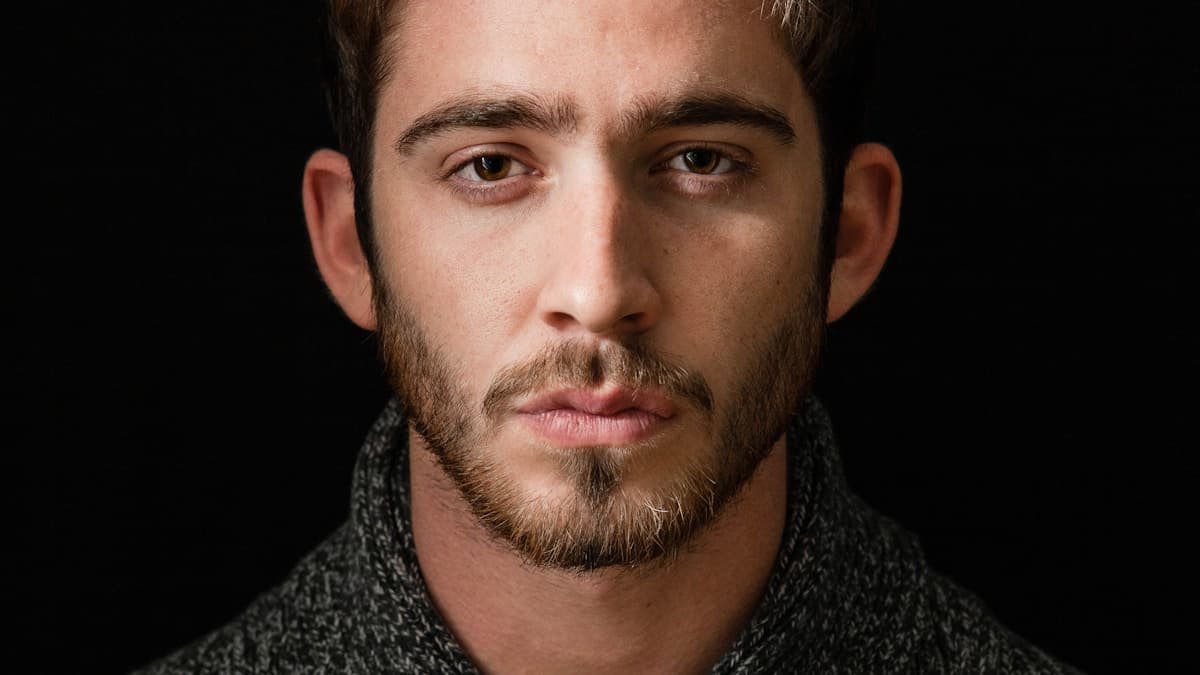
Male rhinoplasty has experienced notable growth in recent years. Increasingly, men visit our practice in Malaga and Marbella interested in improving both the function and aesthetics of their nose. However, male rhinoplasty has important particularities that differentiate it from female rhinoplasty and require a specific surgical approach.
The male nose: anatomical characteristics
The male nose presents distinctive anatomical features that must be respected during surgery to maintain facial harmony and masculine identity. A straight or slightly convex nasal dorsum is considered an attractive trait in men, unlike the slightly concave dorsum typically sought in female rhinoplasty. The male nasal tip tends to be wider and with greater projection than the female. The alar cartilages are usually thicker and more resistant, and male nasal skin is generally thicker and more sebaceous, which influences how it adapts to the new nasal skeleton after surgery. The nasolabial angle (the angle between the nose base and upper lip) also differs: in men, the ideal angle sits between 90 and 95 degrees, whilst in women a somewhat more open angle of between 95 and 110 degrees is sought. Respecting these differences is fundamental for achieving a natural and masculine result.
The importance of preserving masculinity
The most frequent error in male rhinoplasty is applying the same aesthetic criteria as in female rhinoplasty. An excessively refined nose, an overly upturned tip or an excessively concave dorsum can feminise a man's face and produce an unsatisfactory result. In my surgical practice, I pay special attention to preserving the features that define the patient's facial masculinity. This involves maintaining a nasal dorsum with strength and presence, keeping a proportionate nasal tip without excessive refinement, respecting the nasal width appropriate to the masculine face, and avoiding modifications that could feminise appearance. The goal is not to create a "perfect" nose according to abstract standards, but a nose that integrates harmoniously into the patient's masculine face, improving his appearance naturally and subtly.
Most frequent reasons for consultation in men
Dorsal hump
Dorsal hump reduction is the most common request in male rhinoplasty. Many men present a bony or cartilaginous prominence on the nasal bridge that causes them discomfort. The key is reducing this hump whilst maintaining a straight dorsum with presence, avoiding creating an excessively concave profile.
Post-traumatic nasal deviation
Men have a higher incidence of nasal trauma, whether from sports, accidents or altercations. These injuries can leave the nose deviated, with visible asymmetries and frequently with compromised respiratory function. Post-traumatic rhinoplasty in men combines aesthetic correction of deviation with restoration of nasal function.
Wide or drooping nasal tip
Some men consult about a nasal tip they perceive as too wide, bulbous or drooping. Refinement of the male tip requires a measured approach: the aim is to improve definition without creating an artificial or feminised appearance.
Functional problems
A significant percentage of men who visit our Costa del Sol practice are motivated primarily by breathing problems: deviated septum, turbinate hypertrophy or valvular collapse. Many of them take advantage of the functional procedure to make complementary aesthetic improvements.
Particularities of male skin
Male skin is generally thicker than female, with a greater number of sebaceous glands. This has important surgical implications. On one hand, thicker skin better conceals small bony or cartilaginous irregularities. On the other, it limits the degree of definition achievable at the nasal tip, as thick skin does not retract as effectively over the new structures. This anatomical reality must be communicated to the patient during consultation, to establish realistic expectations about the achievable degree of refinement. Dra. Fanjul carefully evaluates each patient's skin thickness as part of preoperative planning.
The consultation: communication and expectations
Communication between surgeon and patient is especially important in male rhinoplasty. Many men express their wish to "improve without it being noticeable", reflecting a legitimate concern about maintaining a natural, un-operated appearance. During consultation, I use digital simulation tools that allow the patient to visualise possible changes before surgery. This greatly facilitates communication, as we can discuss visually which changes are desirable, which are achievable and which might compromise masculine facial harmony. It is also important to address the patient's motivations openly. Rhinoplasty is a personal decision that should be based on a genuine desire for improvement, not external pressure. At our practice, we ensure each patient fully understands what surgery can and cannot achieve.
Surgical techniques in men
The techniques employed are essentially the same as in female rhinoplasty, but applied with different criteria. In many cases, ultrasonic rhinoplasty is especially advantageous in men, as it allows precise bony remodelling of the nasal dorsum with less trauma. The approach may be open or closed. In complex cases, such as post-traumatic rhinoplasty with significant deviation, I tend to prefer the open approach for the greater visibility and control it offers. In simpler cases, the closed approach may suffice and leaves less visible scarring.
Recovery in men
Recovery follows the same phases as in female rhinoplasty, but with some particularities. Thicker male skin may take somewhat longer to reduce swelling, and nasal tip inflammation may be somewhat more persistent. Most men can return to work within 7 to 10 days and resume sporting activity progressively from 4 to 6 weeks. If you are considering rhinoplasty in Malaga, Marbella or Estepona, and want a result that improves your nose whilst maintaining your facial identity, I invite you to a personalised consultation. We shall evaluate your specific case and together design a surgical plan adapted to your goals and masculine facial anatomy.
Questions or need a consultation?
I'll be happy to help you resolve your doubts or schedule an appointment.
Learn more about rhinoplasty & nose surgery.
Related articles
Rhinoplasty Recovery: Day by Day Guide
A detailed guide on what to expect during each stage of rhinoplasty recovery, with practical tips for an optimal postoperative period.
Read more
Ultrasonic Rhinoplasty: Advantages and Full Process
Discover how piezoelectric technology has revolutionised rhinoplasty, offering greater precision, less swelling and a faster recovery.
Read more
Functional vs Aesthetic Rhinoplasty: What is the Difference?
Discover the key differences between functional and aesthetic rhinoplasty, and how both can be combined for optimal results.
Read more